
What Is the Best Tile for a Kitchen Floor?
Choosing kitchen floor tile can feel overwhelming. Your kitchen floor needs to handle daily foot traffic, spills, dropped dishes, cleaning, pets, kids, and still look beautiful with the rest of your design.
The best kitchen floor tile is usually one that balances durability, moisture resistance, easy maintenance, and style. For many homes, porcelain tile is the strongest all-around choice, but ceramic, natural stone, and decorative tile can also work depending on the space.
This guide breaks down what to look for, which tile materials work best, and how to choose a kitchen floor tile you’ll love for years.
Quick Answer: What Is the Best Tile for a Kitchen Floor?
For most kitchens, porcelain tile is the best overall choice because it is durable, water-resistant, easy to clean, and available in many styles.
Before choosing kitchen floor tile, you should:
- Choose a floor-rated tile
- Look for durability and water resistance
- Consider slip resistance
- Order samples before buying
- Match the tile style to your kitchen design
- Check size, grout lines, and maintenance needs
- Confirm lead times before ordering
The best kitchen floor tile should be practical enough for everyday use and beautiful enough to anchor the entire room.
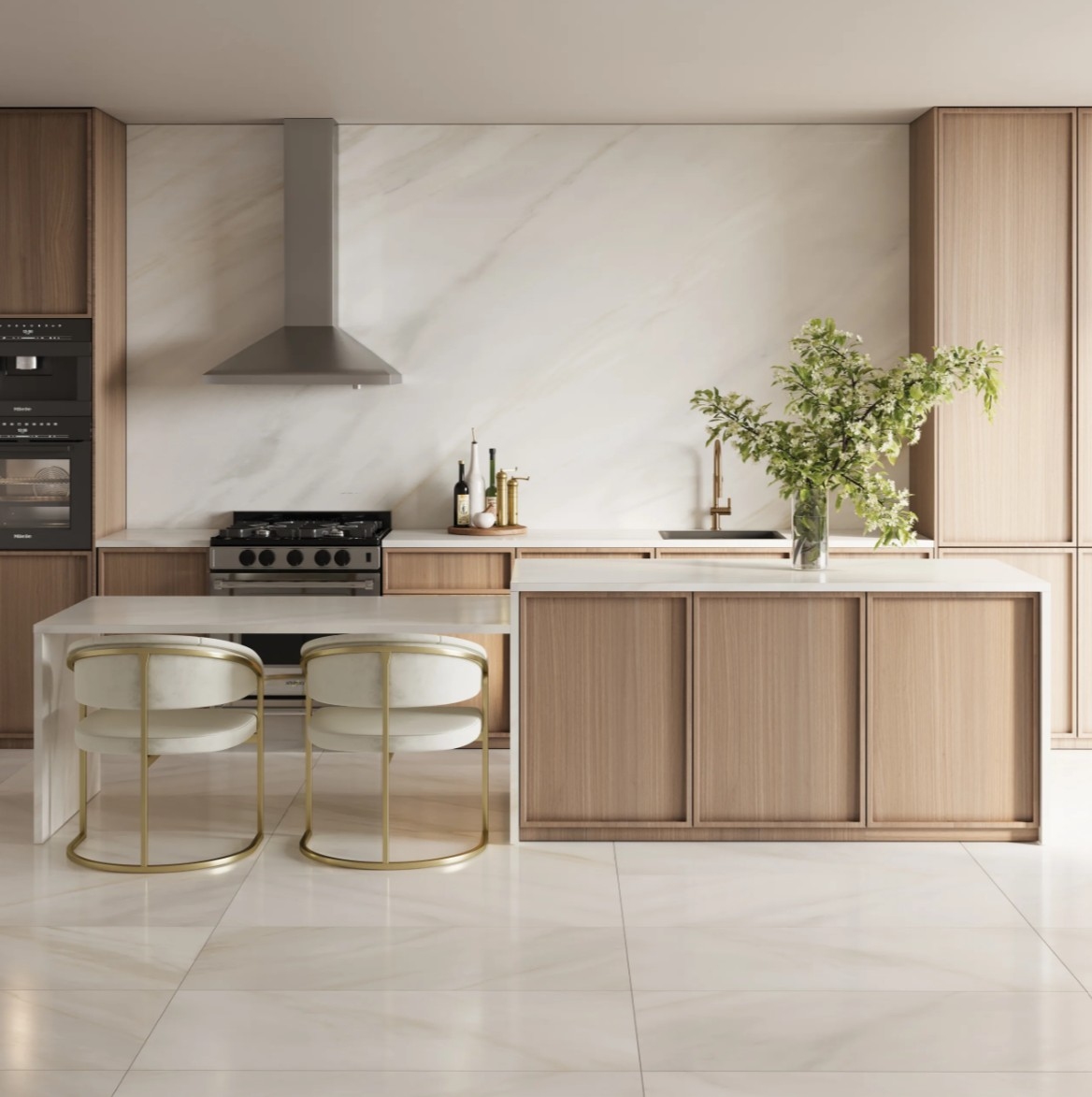
Types of Tile You Can Use for Kitchen Floors
Not all tile is the same. Choosing the right material is one of the most important decisions for a kitchen floor.
Porcelain Tile
Porcelain is one of the most durable and versatile options for kitchen flooring.
Best for:
- Busy kitchens
- High-traffic areas
- Homes with kids or pets
- Indoor and outdoor design continuity
What to know:
- Strong and moisture-resistant
- Easy to clean
- Available in stone, concrete, wood-look, and decorative styles
- Often a great balance of beauty and performance
Ceramic Tile
Ceramic can be a good option for some kitchen floors, especially when you want a more budget-friendly material.
Best for:
- Lower-traffic kitchens
- Smaller spaces
- Budget-conscious projects
- Classic tile looks
What to know:
- Often easier to cut and install
- Available in many colors and patterns
- May be less durable than porcelain
- Should be confirmed as floor-rated before using
Natural Stone Tile
Natural stone creates a high-end, organic look that feels timeless and unique.
Best for:
- Luxury kitchens
- Warm, natural designs
- Statement floors
- Homes where variation is part of the look
What to know:
- Each piece has natural variation
- May require sealing
- Can need more maintenance
- Works best when you understand the care requirements

Decorative & Patterned Tile
Decorative tile can bring personality, movement, and design detail to a kitchen floor.
Best for:
- Statement kitchens
- Smaller floor areas
- Borders or inlays
- Vintage, Mediterranean, or artisan-inspired designs
What to know:
- Always confirm the tile is floor-rated
- Patterns can become the focal point of the room
- Samples are especially important
- Layout planning matters before ordering
How to Choose Kitchen Floor Tile Online
Understanding the process makes everything easier.
Start by deciding the overall look you want.
This may include:
- Modern
- Classic
- Warm and natural
- Bold and patterned
- Minimal and neutral
- Rustic or handmade-inspired
Your floor should work with the cabinets, counters, walls, lighting, and backsplash.
Pick the Right Material
Match the tile material to how the kitchen will be used.
For most kitchens, porcelain is a strong place to start. Ceramic, natural stone, and decorative tile may also work depending on the project.
Order Samples First
Samples are one of the most important steps.
They help you see:
- True color in your lighting
- Texture and finish
- How the tile looks with cabinets and counters
- How multiple options compare side by side
Online images are helpful, but samples give you a much better feel for the tile.
Tile size and layout can completely change the look of your kitchen.
Before ordering, consider:
- Tile size
- Pattern direction
- Grout color
- Edge details
- Room shape
- How cuts will appear near walls or cabinets
A little planning can help the finished floor look more intentional.
Confirm Quantity and Lead Times
Before placing your order, make sure you understand how much tile you need and when it will arrive.
Keep in mind:
- Add extra for cuts and waste
- Some tile may be made-to-order
- Shipping timelines can vary
- Ordering too little can delay the project
When in doubt, ask for help before ordering.
Common Mistakes to Avoid
Avoiding these mistakes can save time, money, and frustration.
- Choosing wall tile for a kitchen floor
- Not ordering samples first
- Forgetting to check slip resistance
- Choosing a material that needs more maintenance than expected
- Underestimating how much tile you need
- Ignoring grout color and grout line size
- Not confirming lead times before installation
- Choosing a tile that clashes with cabinets or countertops
The right tile should look good in photos, in samples, and in the actual kitchen lighting.
Tips to Get the Best Results
- Start with porcelain if you want durability and easy maintenance
- Always confirm the tile is floor-rated
- Order samples before committing
- Look at samples in natural and artificial light
- Compare tile with cabinets, counters, and backsplash
- Choose a grout color early
- Add extra tile for cuts and future repairs
- Ask for design help if you are unsure
Our professional and friendly team at Tango Tile can help you compare options, order samples, and choose a kitchen floor tile that fits your space and style.
Frequently Asked Questions
Is porcelain tile good for kitchen floors?
Yes. Porcelain is one of the best choices for kitchen floors because it is durable, water-resistant, easy to clean, and available in many styles.
Is ceramic tile okay for a kitchen floor?
Yes, but make sure it is rated for floor use. Ceramic can work well in some kitchens, though porcelain is often stronger for high-traffic areas.
What kitchen floor tile is easiest to clean?
Porcelain tile is usually one of the easiest kitchen floor materials to clean because it resists moisture and everyday messes well.
Should kitchen floor tile be matte or glossy?
Matte or textured finishes are often more practical for floors because they can feel less slippery than glossy finishes. Always check the tile’s intended use.
Should I order tile samples before buying?
Yes. Samples help you see the real color, texture, finish, and how the tile looks with your kitchen lighting and materials.