
What Size Tile Makes a Bathroom Look Bigger?
Larger tile can often make a small bathroom feel more open because it creates fewer grout lines and a more continuous surface. Medium size tile can create a similar effect when the dimensions work better with the room’s layout.
That does not mean small bathroom tile is always the wrong choice. Mosaics and smaller formats can add texture and detail, especially in showers and accent areas, while larger tile keeps the main surfaces visually quieter.
When shopping online, consider the size of the individual tile alongside the dimensions of your floor and walls. A sample can also help you judge how the scale, color, and finish will look in your bathroom.
Quick Answer: What Tile Size Makes a Bathroom Look Bigger?
For many small bathrooms, medium to large tile can make the room feel more spacious by reducing the number of visible grout lines.
When choosing bathroom tile size:
- Consider larger tile for a cleaner, more continuous look
- Use medium formats when very large tile would require awkward cuts
- Keep grout color close to the tile for less visual separation
- Consider using similar tile on floors and walls for continuity
- Use smaller mosaic tile selectively for detail or traction
- Think about tile direction as well as size
- Consider the proportions of the actual bathroom
- Order samples before deciding on the final scale
The goal is not simply to choose the largest tile possible. The best size should fit the room naturally and create a balanced layout.
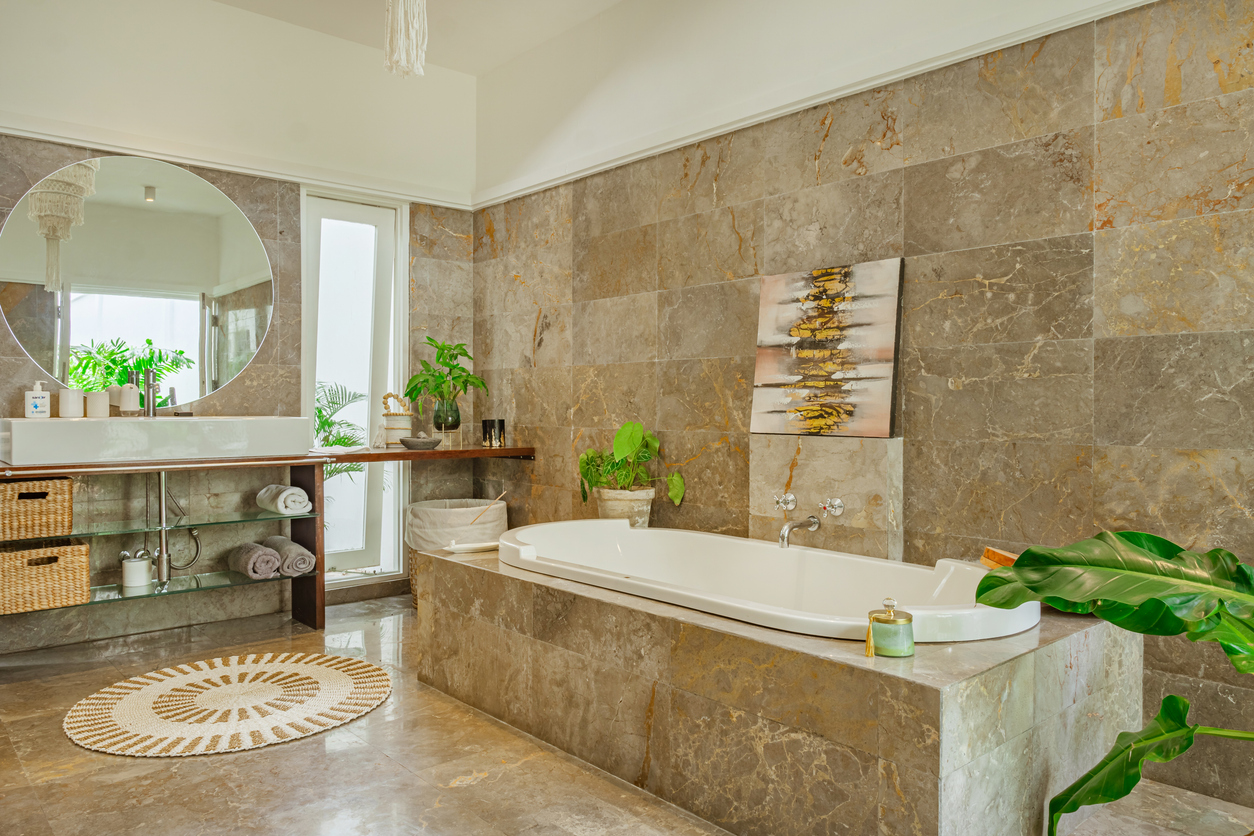
Tile Sizes to Consider for a Small Bathroom
Different tile sizes can make a bathroom feel very different. The right choice depends on how much visual movement and detail you want.
Larger Tile
Larger tile can create broad, uninterrupted surfaces with fewer grout lines.
Best for:
- Small bathroom floors
- Bathroom walls
- Minimal designs
- Creating a more continuous look
What to know:
- Fewer grout lines can make the room feel less divided
- Large tile does not automatically overwhelm a small bathroom
- Room dimensions may require more cuts
- Layout planning becomes especially important
Medium Size Tile
Medium formats offer a balance between visual simplicity and easier layout planning.
Best for:
- Compact bathrooms
- Floors with several fixtures
- Traditional or transitional designs
- Spaces where very large tile would create awkward cuts
What to know:
- Works well across many bathroom sizes
- Can create fewer grout lines than small tile
- Easier to fit around some fixtures and corners
- Available in many shapes and styles
Mosaic & Smaller Tile
Small tile creates more pattern and visible grout lines, which can add detail to the room.
Best for:
- Shower floors
- Niches
- Feature walls
- Decorative accents
What to know:
- More grout lines create a busier visual effect
- Smaller tile can add texture and character
- Mosaics can work especially well in focused areas
- Confirm floor and wet area suitability when relevant
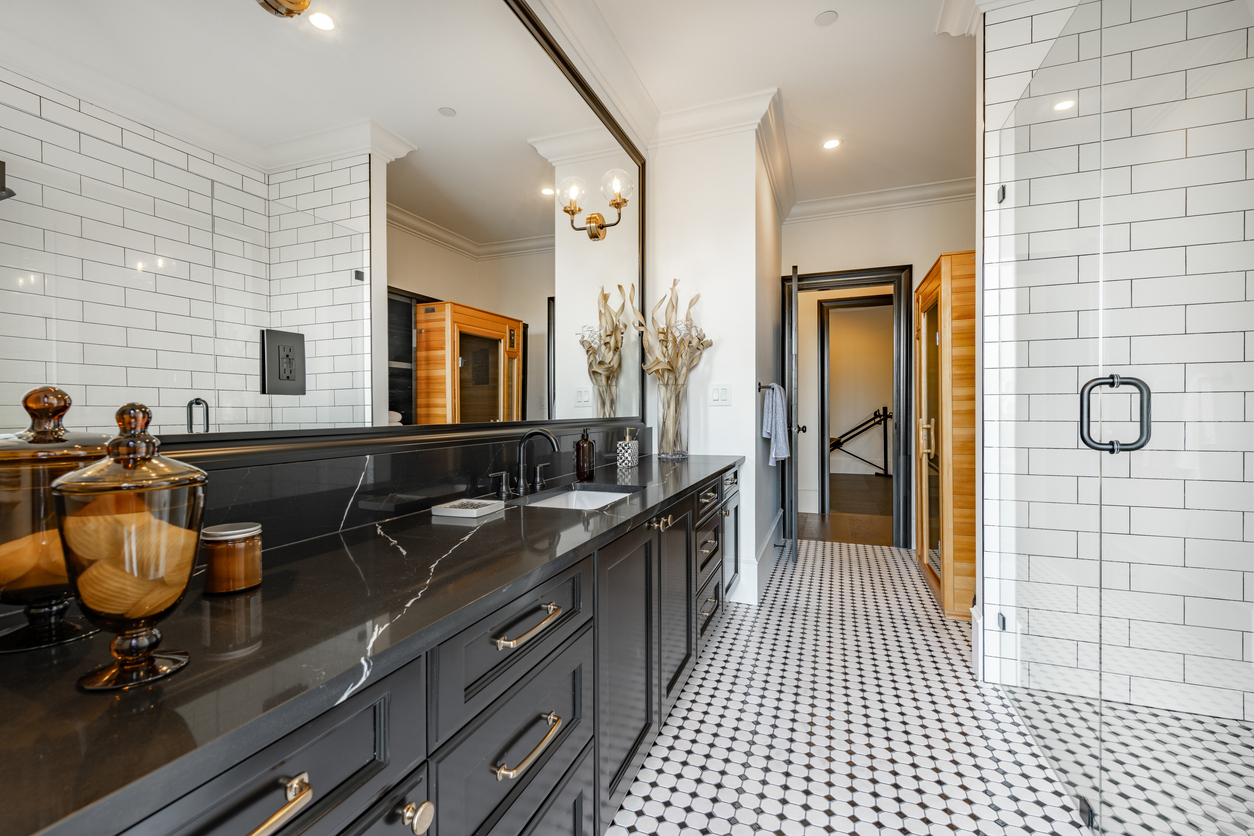
Using the Same Tile on Floors & Walls
Continuity can sometimes make as much difference as tile size itself.
Best for:
- Small bathrooms
- Minimal interiors
- Walk in showers
- Creating a more seamless appearance
What to know:
Using the same or closely related tile across multiple surfaces can reduce visual breaks and help a small bathroom feel more connected. You can still introduce variation through tile direction, finish, or a smaller accent area.
Always confirm that the specific tile is approved for each intended surface. A wall tile is not automatically suitable for bathroom floors.
How to Choose Bathroom Tile Size
A few practical comparisons can help you choose a size that works with the actual proportions of the room.
Measure the Usable Floor and Wall Space
Look at the dimensions around:
- Vanities
- Toilets
- Showers
- Tubs
- Doorways
The goal is to understand how the tile will fit, not simply the total square footage.
Think About Grout Lines
More grout lines visually divide the surface.
If you want the bathroom to feel more open, consider:
- Larger tile
- Narrower grout joints when appropriate
- Grout that closely coordinates with the tile
- Simpler layouts
These choices can create a calmer overall surface.
Consider Tile Direction
Rectangular tile can change how the eye moves through the room.
Depending on the layout, you may use tile direction to emphasize:
- Room width
- Room length
- Wall height
- A shower or vanity feature
Look at the entire surface before deciding on orientation.
Order Samples and Compare Scale
A tile can appear very different online than it does inside a compact bathroom.
Place samples:
- On the bathroom floor
- Against the wall
- Near the vanity
- Under bathroom lighting
Look at them from the doorway as well as close up.
Plan Cuts, Grout, and Quantity
The largest tile is not always the best choice if most pieces need to be heavily cut.
Consider:
- Room dimensions
- Fixture placement
- Corners
- Grout spacing
- Pattern alignment
- Extra material for cuts and breakage
A well balanced layout usually looks better than forcing an oversized format into the space.
Common Mistakes to Avoid
Tile size should work with the bathroom rather than following a strict small room rule.
- Assuming a small bathroom always needs small tile
- Choosing the largest tile available without planning the layout
- Ignoring how many awkward cuts will be required
- Using highly contrasting grout when you want a continuous look
- Covering every surface with a busy small scale pattern
- Choosing tile size without considering shower areas
- Judging scale only from online product photos
- Forgetting to order extra material for cuts
Tips to Get the Best Results
- Consider medium or large tile for a more continuous surface
- Keep grout visually quieter when you want the room to feel open
- Use mosaics selectively for detail and function
- Consider coordinating floor and wall tile
- Plan rectangular tile direction carefully
- Order samples and view them in the bathroom
- Check floor and wet area suitability before ordering
- Plan the full layout before calculating quantity
Tile size is only one part of making a bathroom feel bigger. Color, grout, layout, lighting, and how consistently surfaces connect can all influence the finished space.
Frequently Asked Questions
Does large tile make a small bathroom look bigger?
It can. Larger tile creates fewer grout lines, which may make floors and walls appear more continuous and less visually divided.
Is large tile too big for a small bathroom?
Not necessarily. Large tile can work very well in a small bathroom when the room dimensions allow for a balanced layout without excessive cutting.
Are small tiles bad for small bathrooms?
No. Small and mosaic tile can add texture, pattern, and character. They often work best in focused areas such as shower floors, niches, or accent walls when you want the rest of the bathroom to feel more open.
Does grout color affect how big a bathroom looks?
Yes. Grout that closely coordinates with the tile can make individual pieces less visually distinct, creating a more continuous surface.
Should I order bathroom tile samples before choosing a size?
Yes. Samples help you judge the actual scale, color, texture, and finish within the dimensions and lighting of your bathroom before placing a larger order.