
What Factors Should I Consider When Selecting Decorative Tiles for a Kitchen Renovation Project?
Decorative tile can bring color, pattern, texture, and personality into a kitchen renovation, but the design itself is only part of the decision. You also need to think about where the tile will be installed, how it works with surrounding finishes, and how much maintenance it may require.
A bold patterned tile may be perfect for a backsplash, while a simpler decorative design may make more sense across a larger floor or wall area. Material, finish, grout, scale, and layout can all affect the finished look.
When buying tile online, ordering samples is one of the easiest ways to compare these details with your cabinets, countertops, flooring, and kitchen lighting before making a larger commitment.
Quick Answer: What Should You Consider When Choosing Decorative Kitchen Tile?
When selecting decorative tile for a kitchen renovation, consider where the tile will be used, how much pattern or color you want, the material and finish, maintenance needs, and how the design works with the rest of the kitchen.
Before choosing decorative tile:
- Decide whether the tile should blend in or become a focal point
- Compare the pattern with cabinets and countertops
- Choose a material suited to the installation area
- Consider cleaning, moisture, and daily wear
- Think about grout color and pattern direction
- Order samples to compare color, texture, and scale
- Plan the layout before ordering your full quantity
The best decorative tile adds personality without competing with every other finish in the room
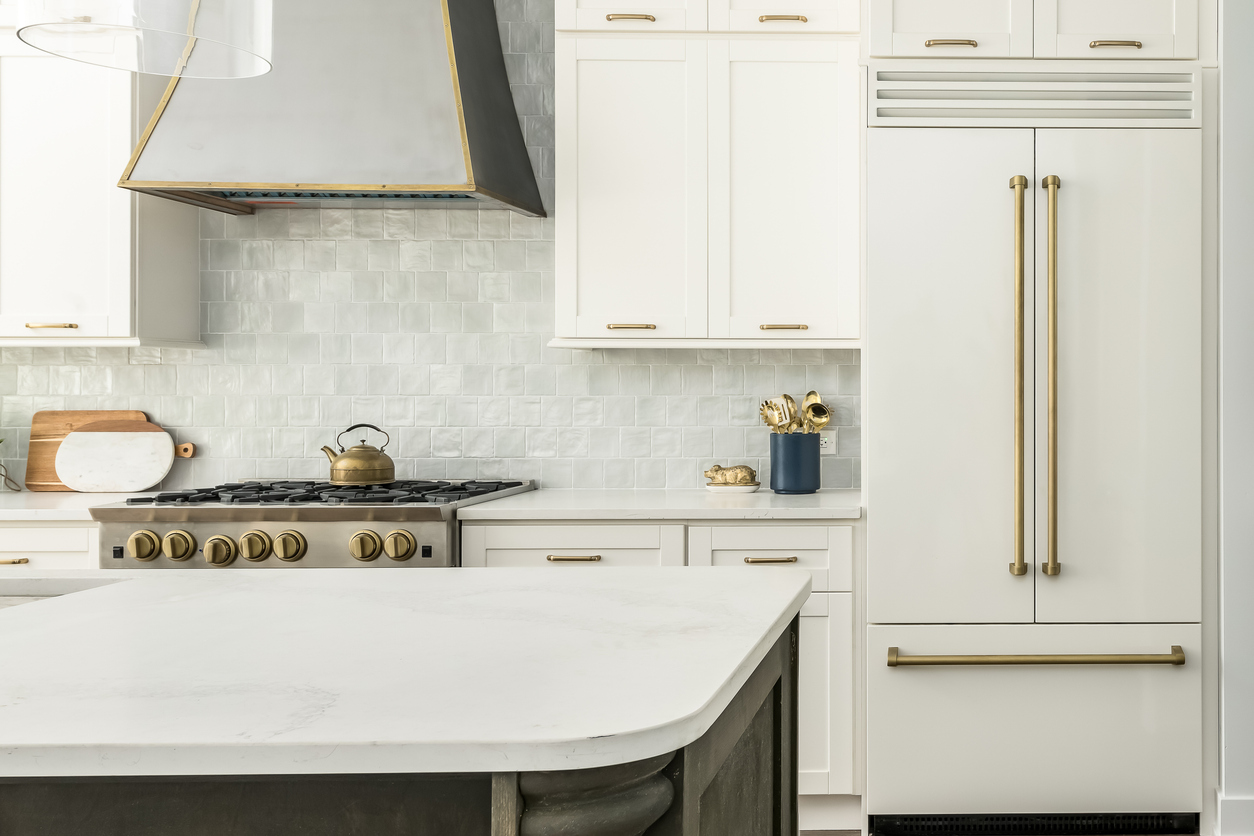
Decorative Tile Styles to Compare
Decorative tile can range from subtle texture to bold pattern. Understanding the overall look you want can make it easier to narrow down your options.
Patterned Tile
Patterned tile can create an immediate focal point and bring more movement into a kitchen.
Best for:
- Kitchen backsplashes
- Feature walls
- Accent areas
- Statement floors
What to know:
- Large patterns can feel different once repeated across a full surface
- Simpler surrounding finishes can help the design stand out
- Pattern direction should be planned before installation
- Samples help you understand the true scale of the design
Mosaic Tile
Mosaic tile uses smaller pieces to introduce detail, shape, and texture.
Best for:
- Backsplashes
- Smaller accent areas
- Detailed designs
- Adding texture without a large pattern
What to know:
- Smaller pieces generally create more grout lines
- Shape can be just as important as color
- Mosaics can work as an accent or across a full backsplash
- Grout color can noticeably change the finished appearance
Artisan-Inspired Tile
Artisan-inspired tile can bring variation, texture, and a more handcrafted feeling into the kitchen.
Best for:
- Character-rich kitchens
- Colorful backsplashes
- Warm, layered designs
- Spaces that benefit from subtle variation
What to know:
- Color and surface variation may be part of the intended look
- Individual pieces may not appear completely uniform
- Lighting can emphasize texture and tonal differences
- Samples are especially useful when comparing variation
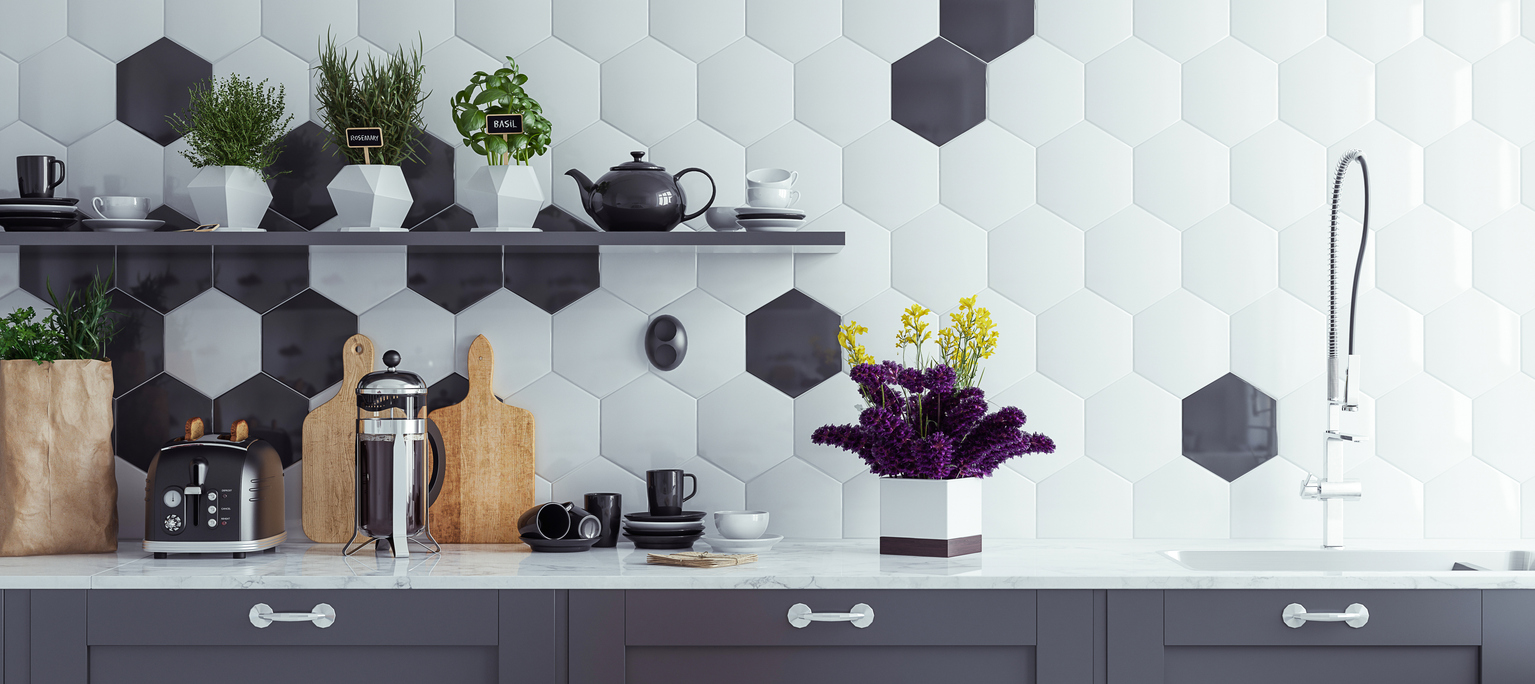
Balancing Decorative Tile With the Rest of the Kitchen
Decorative tile works best when it feels intentional within the larger kitchen design.
Best for:
- Coordinating tile with cabinets and countertops
- Creating contrast without overwhelming the room
- Bringing color into a neutral kitchen
- Giving one surface more visual attention
What to know:
If your countertops already have strong veining or movement, a quieter decorative tile may create better balance. With simpler cabinets and counters, patterned or colorful tile can take on a larger role.
Look at samples next to the actual finishes in your kitchen. Undertones, lighting, grout, and surrounding colors can make the same tile feel very different from how it appears online.
How to Choose Decorative Tile for a Kitchen Renovation
A few decisions early in the process can make comparing decorative tile much easier.
Decide Where the Tile Will Be Used
Start with the installation area.
Consider whether the tile is for:
- A backsplash
- A feature wall
- The kitchen floor
- An accent area
- Multiple surfaces
Where the tile will be installed affects the material, finish, durability, and maintenance requirements you should consider.
Choose How Bold You Want the Design to Feel
Think about whether you want subtle texture or a stronger statement.
Colorful and patterned tile can become a focal point, while quieter decorative designs can add interest without dominating the kitchen.
Compare Samples With Your Kitchen Finishes
Order tile samples and look at them alongside your cabinets, countertops, flooring, hardware, and wall colors.
View them in both natural and artificial light so you can see how the color and finish change throughout the day.
Think About Grout and Layout
Grout and installation pattern can change the overall design significantly.
Consider:
- Matching or contrasting grout
- Pattern direction
- Tile spacing
- Borders and transitions
- Where the design begins and ends
Planning these details before installation can create a more polished result.
Review Practical Requirements
Make sure the tile is appropriate for the location where you plan to use it.
Check:
- Recommended applications
- Maintenance requirements
- Water exposure
- Floor suitability when relevant
- Cleaning instructions
- Quantity and overage needs
Design matters, but the tile still needs to perform well in the space.
Common Mistakes to Avoid
Decorative tile makes a strong visual impact, so small planning mistakes can become more noticeable.
- Choosing a pattern without seeing a sample first
- Using too many competing patterns in one kitchen
- Ignoring how the tile works with countertops and cabinets
- Forgetting to check whether the tile suits the installation area
- Choosing grout only after the tile has been installed
- Looking at a single tile instead of considering the full pattern
- Forgetting about edges, outlets, and transitions
- Ordering without allowing extra material for cuts or pattern alignment
Tips to Get the Best Results
- Decide which surface should be the main focal point
- Compare decorative tile with simpler options before choosing
- Order samples and view them in your actual kitchen
- Look at patterns from both close up and across the room
- Compare tile with cabinets and countertops at the same time
- Choose grout as part of the overall design
- Consider maintenance as well as appearance
- Plan quantity, layout, and installation details before ordering
Taking time to compare samples, patterns, and surrounding finishes can make choosing decorative kitchen tile online much easier.
Frequently Asked Questions
Is decorative tile good for a kitchen backsplash?
Yes. A backsplash is one of the most popular places to use decorative tile because it can add pattern or color without covering every surface in the kitchen.
Can decorative tile be used on a kitchen floor?
Some decorative tiles are suitable for floors, while others are intended only for walls. Always check the recommended application and durability information for the specific tile.
How do I keep patterned kitchen tile from looking too busy?
Choose one main area for the strongest pattern and keep surrounding finishes more restrained. Looking at samples beside your countertops and cabinets can help you judge the balance.
Should decorative tile match the countertops?
It does not need to match exactly. Coordinating undertones or colors can help the surfaces feel connected, while contrast can make the decorative tile stand out more.
Should I order decorative tile samples before buying?
Yes. Samples help you compare the actual color, texture, finish, and pattern scale with your kitchen surfaces and lighting before placing a full order.