
Is Artisan Tile Suitable for Floors, Walls, Backsplashes, or Showers?
Artisan tile can work beautifully on floors, walls, backsplashes, and even in showers, but the right application depends on the specific tile rather than the artisan label alone.
Some artisan tiles are designed primarily for walls, while others are durable enough for floors or approved for wet areas. Material, finish, water absorption, slip resistance, and manufacturer recommendations all matter.
Because artisan tile often includes variation in color, glaze, texture, or shape, samples can also help you understand how the finished surface may look before you order a larger quantity.
Quick Answer: Where Can You Use Artisan Tile?
Artisan tile can be used in many parts of the home, but you should always confirm that the specific tile is approved for the surface and conditions where it will be installed.
Common applications include:
- Kitchen backsplashes
- Bathroom walls
- Feature walls
- Shower walls when approved for wet areas
- Bathroom floors when specifically floor-rated
- Entryways when suitable for foot traffic
- Niches and decorative accents
- Fireplace or architectural feature areas when appropriate
Artisan appearance does not automatically determine durability or water resistance, so product specifications should guide the final decision.
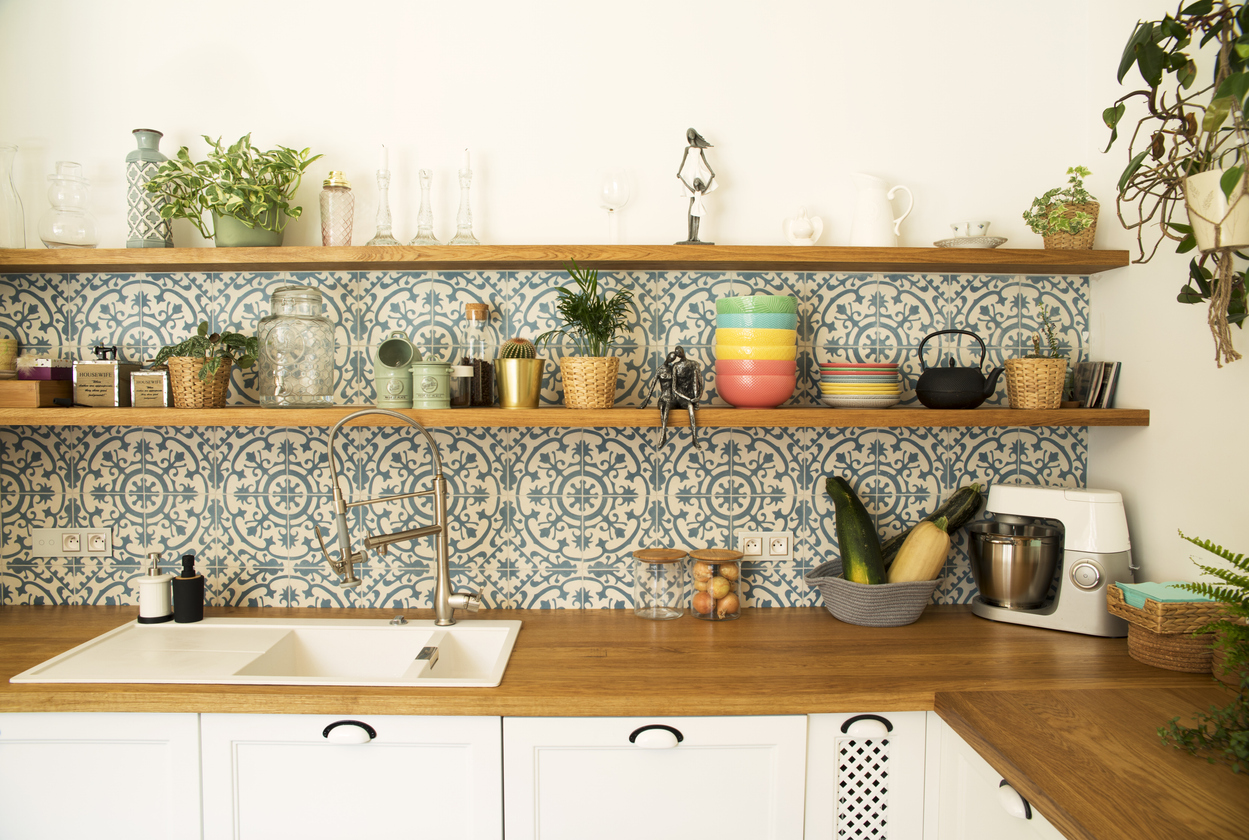
Where Artisan Tile Works Best
Different applications place very different demands on tile.
Walls & Backsplashes
Walls and backsplashes are some of the most natural places to use artisan tile because they allow color, texture, and variation to be seen up close.
Best for:
- Kitchen backsplashes
- Vanity walls
- Feature walls
- Decorative accents
What to know:
- Natural variation can create a more layered surface
- Uneven edges or glaze variation may be part of the design
- Grout color can strongly influence the final appearance
- Cleaning requirements depend on the material and finish
Floors
Some artisan tile can be used on floors, but only when the product is specifically rated for that use.
Best for:
- Bathroom floors
- Powder rooms
- Entryways
- Smaller statement areas
What to know:
- Floor rating is essential
- Surface wear and foot traffic should be considered
- Slip resistance matters in wet areas
- Some handcrafted finishes may show wear differently over time
Shower Areas
Artisan tile can create a distinctive shower, especially on walls, niches, and feature sections.
Best for:
- Shower walls
- Niches
- Accent bands
- Feature walls
What to know:
- The tile must be approved for wet-area use
- Water absorption and finish matter
- Shower floors have additional traction requirements
- Proper waterproofing behind the tile is essential
Artisan Tile on Shower Floors vs Shower Walls
A tile that works on a shower wall is not automatically appropriate for the shower floor.
Best for:
- Understanding wet-area limitations
- Choosing coordinated shower materials
- Mixing artisan tile with practical field tile
- Creating decorative shower features
What to know:
Shower walls generally place fewer traction demands on tile, making them a natural place for decorative artisan surfaces. Shower floors need appropriate slip resistance and must work with the slope and drainage of the shower.
If an artisan tile you love is not suitable for the floor, you can often create a coordinated design by using it on the walls or niche and pairing it with a more practical floor tile.
How to Choose Artisan Tile for the Right Surface
A few specification checks can help you determine where a tile belongs.
Check the Recommended Application
Start with the product information.
Look for:
- Wall use
- Floor use
- Wet-area approval
- Shower suitability
- Exterior use if relevant
Do not assume that all artisan tiles share the same performance characteristics.
Consider the Material
Artisan tile can refer to many different materials and manufacturing methods.
Consider:
- Ceramic
- Porcelain
- Cement
- Stone
- Other decorative materials
Each can have different requirements for moisture, sealing, wear, and cleaning.
Evaluate Finish and Texture
The surface affects both appearance and practicality.
Think about:
- Smooth glaze
- Matte finish
- Texture
- Uneven edges
- Natural variation
More texture can add character but may also require additional cleaning attention.
Order Multiple Samples
Artisan tile may vary more than highly uniform standard tile.
Compare several pieces for:
- Color variation
- Glaze variation
- Texture
- Edge shape
- Overall character
Seeing multiple samples can give you a better sense of how a larger installation may look.
Plan Grout, Layout, and Quantity
Variation makes layout planning especially important.
Consider:
- Grout color
- Joint width
- Tile orientation
- Mixing pieces before installation
- Cuts and transitions
- Extra tile for breakage and future repairs
Planning ahead can help the variation feel intentional rather than uneven.
Common Mistakes to Avoid
Artisan tile should be selected for performance as well as appearance.
- Assuming every artisan tile is suitable for floors
- Using wall-only tile in high-traffic areas
- Installing tile in a shower without checking wet-area approval
- Ignoring slip resistance on bathroom or shower floors
- Expecting every piece to look identical
- Choosing grout without considering variation
- Ordering from a single product image without reviewing samples
- Forgetting to check sealing and care requirements
Tips to Get the Best Results
- Use product specifications to determine the right application
- Consider walls and backsplashes for highly decorative artisan tile
- Check floor ratings before using tile underfoot
- Confirm wet-area suitability for showers
- Order multiple samples when variation is expected
- Compare grout colors before installation
- Mix pieces during layout to distribute variation
- Order extra tile for cuts and future repairs
Artisan tile can work across many surfaces when its visual character is matched with the practical demands of the space.
Frequently Asked Questions
Is artisan tile good for backsplashes?
Yes. Backsplashes are one of the most common places to use artisan tile because they allow color, glaze, texture, and variation to become a focal point.
Can artisan tile be used on floors?
Some artisan tile can be used on floors, but only when the specific product is floor-rated and suitable for the expected traffic and conditions.
Can artisan tile be used in showers?
Yes, when the specific tile is approved for wet areas. Shower walls and niches are often especially well suited to decorative artisan tile.
Can artisan tile be used on shower floors?
Sometimes. The tile must be approved for shower floors and provide appropriate traction. Not every artisan tile that works on shower walls is suitable underfoot.
Should I order artisan tile samples first?
Yes. Samples are especially helpful with artisan tile because color, glaze, texture, shape, and edge variation may be part of the finished appearance.