

How to Select Tile for Your Home Exterior: A Complete Design Guide
October 26, 2026
Exterior tile has a harder job than anything you put inside. It has to hold up to rain, sun, and freezing nights, stay safe underfoot when it’s wet, and still look right from fifty feet away rather than fifteen inches.
That last part catches people off guard. A tile that looks perfect on a screen or in your hand can read completely differently once it covers a patio wall in full afternoon sun. Outdoor light is brighter and less forgiving than anything indoors, and scale changes how a pattern or a color behaves.
This guide walks through how we’d approach the decision: starting with your home, narrowing by color and material, matching the tile to where it’s actually going, and testing it properly before you order.
Start With Your Home’s Architecture and Surroundings

Let the Architecture Lead
Your home already has a point of view, and the easiest exterior tile decisions work with it instead of against it.
A Spanish or Mediterranean home takes naturally to terracotta, handmade cement tile, and warm earth tones. A midcentury or modern facade usually wants clean, large-format surfaces with minimal grout interruption. Craftsman and traditional homes tend to look right with stacked stone and textured profiles that feel built rather than applied. Farmhouse and transitional exteriors sit comfortably between the two, and often lean on soft neutrals with visible texture.
None of this is a rule. It’s a starting point that keeps you from fighting the house.
Coordinate With What’s Already There
Exterior tile almost never appears alone. It sits next to siding, roofing, window trim, gutters, a front door, and whatever hardscape you already have.
Pull those materials together before you shortlist anything. Note the roof color and its undertone, the siding, the trim, and the existing concrete or pavers. Two or three materials working together usually looks better than four or five competing, so decide early whether the tile is the feature or the backdrop.
One thing people miss: the roof is often the largest single color on a house, and it has a strong undertone. A gray roof with a blue cast and a gray tile with a brown cast will quietly clash no matter how good each one looks separately.
Read the Light and the Setting
Walk the area at a few different times of day before you commit. A north-facing wall stays in cool, even light. A west-facing patio takes direct sun through the whole afternoon and will wash out pale colors while making warm ones glow. Mature trees cast green-tinted shade that shifts how stone and tile read.
The landscape matters too. Against heavy greenery, warm and earthy tones tend to settle in. In a sparse or desert-leaning yard, cooler grays and whites hold their own.
Color, Undertone, and Finish Outdoors
Warm, Cool, and Neutral
Warm tones, which include creams, tans, terracotta, and golden browns, feel grounded and tend to flatter traditional and Mediterranean architecture. They also hold up visually in bright sun, where cooler colors can look flat.
Cool tones, meaning grays, blue-grays, and crisp whites, read clean and contemporary. They work beautifully in shade and in overcast climates, though pure white can glare hard in full sun.
True neutrals give you the most flexibility, especially when the rest of the exterior is already doing something interesting. You can browse by color if you want to narrow things down before thinking about material.
Why Undertones Matter More Outside
Every neutral leans somewhere. A beige can lean pink, yellow, or green. A gray can lean blue, brown, or purple. Indoors, artificial lighting flattens a lot of that. Outdoors, natural light exaggerates it.
The practical test: hold a sample against a sheet of plain white paper in daylight. The undertone shows up immediately once it has something truly neutral to sit against. Then hold it against your actual siding and roof.
Finish and Texture
Polished surfaces reflect light, show water spots, and get slippery when wet, which makes them a poor fit for most outdoor floors. Matte, honed, textured, and split-face finishes absorb light instead of bouncing it, hide dirt better, and give you far more grip.
Texture also changes color. The same stone in a honed finish and a split-face finish can look like two different products, because the rougher surface creates shadow across its own face. That shadow is the reason textured tile reads so well on a large wall from a distance.
Material Matters More Outdoors
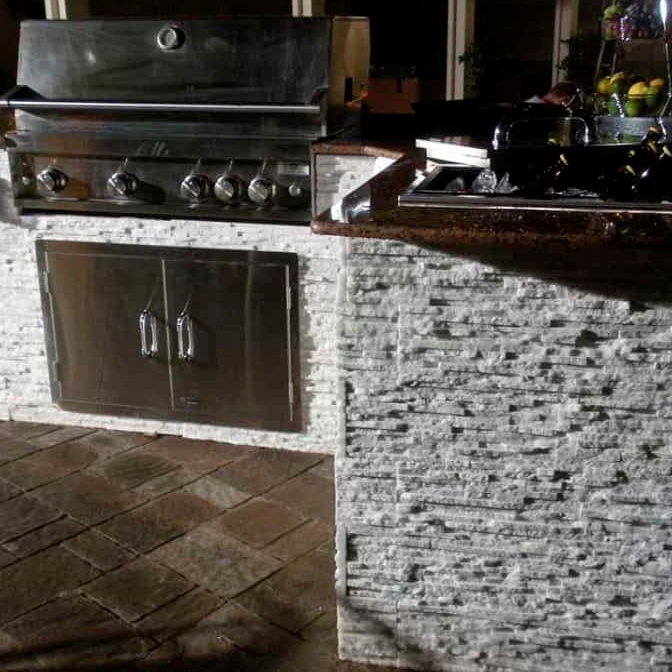
Indoors, material choice is mostly about looks and maintenance. Outdoors, it decides whether the installation survives.
Porcelain
Porcelain is the workhorse for exterior floors. By definition it absorbs 0.5% water or less, which is what makes it so stable in wet conditions, and it comes in large formats that suit patios and pavings. Modern porcelain also does a convincing job imitating stone, concrete, and wood without the maintenance that comes with the real thing.
Natural Stone
Natural stone brings depth and variation that manufactured products can’t fully replicate. Limestone and quartzite both perform well outdoors, and quartzite in particular is dense and hard-wearing. Stacked and dimensional stone profiles are built for exterior walls, columns, and chimney faces, where their texture does most of the design work.
Expect variation from piece to piece. That’s the appeal, not a defect, but it does mean you should look at several pieces rather than one.
Marble
Marble can work outdoors, but it comes with conditions. It’s calcareous, so acidic rain and cleaners can etch it, and polished marble gets genuinely slippery when wet. If you want marble outside, look at honed or tumbled finishes, keep it off pool decks and wet walkways, and plan on sealing it.
Cement and Terracotta
Handmade cement tile and terracotta carry character that’s hard to match, especially on covered patios, entryways, and courtyards. Both are porous and need sealing, and both are better suited to mild climates than to hard freeze-thaw cycles. Check the specific product before committing, since performance varies by manufacturer.
You can see the full range on our materials pages.
The Specs That Decide It
Three numbers matter more than anything else when you’re buying tile for outdoors:
- Water absorption. Lower is better outside. Porcelain sits at 0.5% or less. More absorbent materials take on water, which becomes a problem the moment temperatures drop.
- Freeze-thaw rating. This gets tested separately from absorption, so don’t assume a dense tile is automatically frost-resistant. If you get freezing weather, confirm the rating rather than infer it.
- Slip resistance, measured as DCOF. The industry benchmark for level interior wet areas is 0.42 or higher. Outdoor areas that get wet, like patios, walkways, and pool decks, call for more grip than that and more surface texture. There’s no single published number for exterior use, so look for products specifically rated for exterior wet conditions.
If you’re unsure whether a particular tile suits your climate or application, call us at 855-358-2646 and we’ll tell you straight.
Scale, Layout, and Where the Tile Goes

Facades and Feature Walls
Large vertical surfaces are viewed from a distance, which mutes fine detail and amplifies overall tone and texture. Busy patterns tend to turn into noise. Textured stone profiles, on the other hand, gain depth at scale because the shadows read clearly from across a yard.
Patios, Pool Surrounds, and Walkways
Underfoot, slip resistance and comfort outrank everything. Dark tile absorbs heat and gets uncomfortable barefoot, which matters around pools and spas. Large-format pavers give you fewer grout lines and a cleaner look, though they need a well-prepared, properly sloped base.
Steps, Risers, and Transitions
Steps deserve extra attention because that’s where falls happen. Many homeowners use a more textured version of the same tile on treads, or add a bullnose or trim piece at the edge for definition and grip. Plan these pieces at the same time as the field tile so everything comes from matching production.
Format and Grout
Larger formats read calmer and more modern. Smaller formats and mosaics add detail that only works at close range, which makes them better for entryways, risers, and accent panels than for a whole patio.
Grout color changes the result more than most people expect. Matching the grout to the tile makes a surface look continuous. Contrasting grout turns the layout itself into the pattern. Outdoors, slightly darker grout also hides dirt and weathering better than a bright white.
See It Before You Commit

This is the step people skip, and it’s the one that prevents expensive regret.
Order Samples
No screen reproduces natural material accurately. Monitors vary in color calibration and brightness, and photography flattens texture. Order samples of your shortlist before you place a real order. Three or four is usually enough to make the decision obvious.
View Them in Real Light
Take the samples outside and put them where the tile is actually going. Look at them in morning light, at midday, and again in late afternoon. Then check them in shade, and once more after dark if you have exterior lighting, since warm landscape lighting shifts color noticeably.
Hold them against your siding, your roof, and your trim while you’re out there. A sample that looks great on a kitchen counter tells you almost nothing about how it will sit on your house.
Look at Them Wet
This one is specific to outdoor projects and it matters twice over. Wet tile looks different, usually darker and more saturated, and in a rainy climate that’s how you’ll see it for a good chunk of the year. Wetting the sample also gives you a feel for how much grip the surface actually has.
Pour some water on it, then run your hand across it. If it feels slick in your hand, it will be slick underfoot.
Plan for Variation and Order Enough
Natural stone, cement tile, and terracotta all vary between pieces and between production runs. Lay several sample pieces side by side so you’re judging the range rather than one lucky tile.
Order at least 10% extra, and more like 15% to 20% for diagonal layouts, patterns, or anything with significant natural variation. Ordering everything at once keeps your tile from the same run, and leftovers give you replacement pieces years later when matching would be impossible. Our shipping information covers lead times so you can plan around your installer’s schedule.
Get a Second Opinion
If you’re torn between options or trying to coordinate several materials at once, we offer a free tile design consultation and mock-ups. Send us photos of your home and what you’re considering, and we’ll work through it with you. Start browsing our outdoor tile or get in touch and we’ll help you narrow it down.
Frequently Asked Questions
What type of tile works best outdoors?
Porcelain is the most reliable choice for exterior floors because it absorbs very little water and comes in large, durable formats. For vertical surfaces like facades and chimneys, natural stone profiles give you texture and depth that hold up visually at a distance. The right answer depends on your climate, the surface, and whether the area gets wet.
Can porcelain tile be used outside in freezing weather?
Usually, but confirm the product’s freeze-thaw rating rather than assuming. Low water absorption helps, though frost resistance gets tested separately. If your winters drop below freezing, look for tile rated specifically for freeze-thaw conditions.
Is natural stone slippery when wet?
It depends entirely on the finish. Polished stone is slippery when wet and belongs on walls rather than floors. Honed, tumbled, flamed, and split-face finishes give you much more grip. For any outdoor floor that gets wet, choose a product rated for exterior wet use.
Do outdoor tiles need to be sealed?
Natural stone, cement tile, and terracotta generally do, and they need resealing periodically depending on exposure. Porcelain doesn’t need sealing, though the grout may benefit from it. Check the manufacturer’s guidance for your specific product.
How much extra tile should I order?
At least 10% over your measured square footage, and 15% to 20% for diagonal or patterned layouts, or for materials with heavy natural variation. Order it all at once so everything comes from the same production run, and keep the leftovers for future repairs.
Can I use indoor tile outside?
Not reliably. Indoor tile often lacks the freeze-thaw resistance and slip rating that outdoor conditions require, and many indoor finishes are too smooth to be safe when wet. Stick with tile rated for exterior use.
How do I know the color is right if I’m buying online?
Order samples and look at them outside, in the actual spot, at several times of day and both wet and dry. Hold them against your siding and roof. If you’d like a second set of eyes, our design team can review photos of your home and help you compare options.