
Can You Use the Same Tile on Bathroom Floors and Walls?
Yes, you can often use the same tile on bathroom floors and walls, as long as the specific tile is approved for both applications. This approach can create a more continuous look and make the bathroom feel visually connected.
The important distinction is that floor tile generally needs to meet more demanding requirements than wall tile. A tile suitable only for walls should not automatically be installed on a bathroom floor.
When shopping online, check the recommended applications, wet-area suitability, finish, and floor rating before deciding to carry one tile across multiple bathroom surfaces.
Quick Answer: Can You Use the Same Tile on Bathroom Floors and Walls?
Yes, if the tile is approved for floor use and appropriate for the bathroom conditions where it will be installed.
Before using one tile throughout the bathroom, consider:
- Whether the tile is specifically approved for floors
- Wet-area suitability for showers or other exposed areas
- Slip resistance on bathroom floors
- Tile size and how it fits each surface
- Surface texture and ease of cleaning
- Whether the wall can support the selected tile and installation
- Grout color and joint placement
- Samples to compare the tile throughout the room
Using the same tile can simplify the design, but each surface still has its own practical requirements.
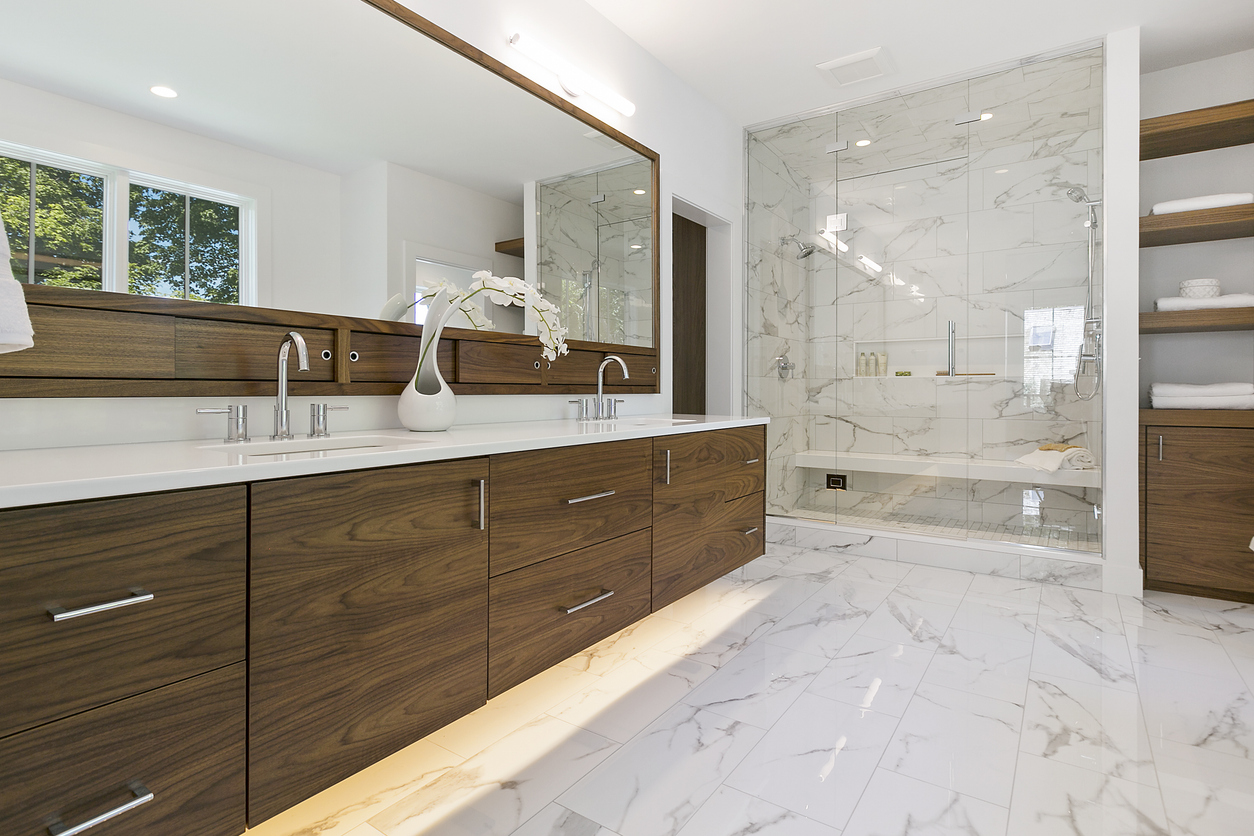
Ways to Use the Same Tile Throughout a Bathroom
One tile does not have to look exactly the same on every surface. Size, layout, and finish can create variation while maintaining a coordinated design.
Same Tile on the Floor and Main Walls
Continuing one tile from the floor onto the walls can create a clean, unified appearance.
Best for:
- Small bathrooms
- Minimal designs
- Contemporary spaces
- Creating visual continuity
What to know:
- The tile must be suitable for floor use
- Grout placement becomes more noticeable across multiple surfaces
- Larger formats can reduce visual breaks
- Layout should be planned as a complete room
Same Tile in Different Sizes
Using related sizes from the same tile design can add practical variation.
Best for:
- Coordinated bathrooms
- Shower floors and walls
- Bathrooms where you want subtle contrast
- Designs that need different scales
What to know:
- Smaller formats may work better on certain shower floors
- Larger formats can create cleaner wall surfaces
- Color and finish remain connected
- Confirm each size is approved for its intended application
Same Tile With Different Layouts
Changing tile direction or pattern can separate areas without introducing a completely different material.
Best for:
- Shower feature walls
- Vanity areas
- Small bathrooms
- Simple color palettes
What to know:
- Vertical layouts can emphasize height
- Horizontal layouts can emphasize width
- Pattern changes create subtle definition
- Grout color can help unify the different layouts
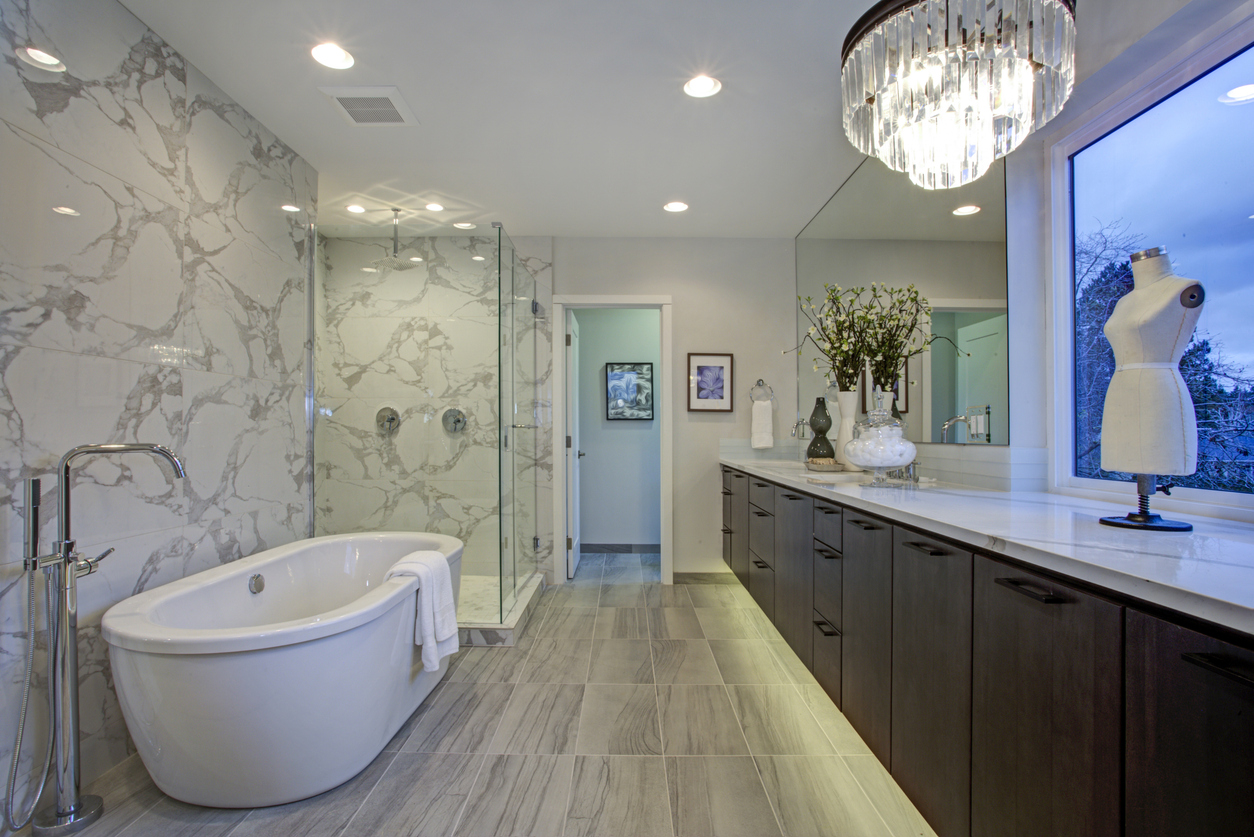
Floor Tile vs Wall Tile
The most important consideration is whether the tile can handle the demands of a bathroom floor.
Best for:
- Understanding product specifications
- Comparing wall-only and floor-rated tile
- Planning a full bathroom design
- Avoiding unsuitable applications
What to know:
A floor-rated tile may often be considered for wall applications when the installation and substrate are appropriate. A wall-only tile, however, may not be designed to handle foot traffic, wear, or the other demands placed on flooring.
Bathroom floors also need appropriate traction, especially when water may be present. Always review the specifications for the individual tile rather than assuming matching appearance means matching performance.
How to Choose One Tile for Bathroom Floors and Walls
A few checks can help determine whether one tile will work successfully across the room.
Start With Floor Suitability
If you want the same tile everywhere, begin with a product approved for floors.
Check:
- Floor applications
- Bathroom suitability
- Wet-area use
- Slip-resistance information
This immediately narrows the options to tiles that can handle the more demanding surface.
Think About Wet Areas
Not every bathroom surface receives the same amount of water.
Consider:
- Main bathroom floors
- Shower floors
- Shower walls
- Vanity walls
- Areas around tubs
Confirm that the specific tile is suitable for each location.
Consider Tile Size
One format may not be ideal everywhere.
For example:
- Larger tile can create cleaner walls
- Medium formats can work across floors and walls
- Smaller tile may be useful where more grout or flexibility is needed
Using different sizes of a coordinated tile can maintain continuity without forcing one format onto every surface.
Order Samples and Compare the Surfaces
Place samples both horizontally and vertically.
Look at them:
- On the bathroom floor
- Against the wall
- Under bathroom lighting
- Beside the vanity and fixtures
The same finish can reflect light differently on a wall than it does on the floor.
Plan Grout and Layout Together
Using the same tile makes grout and alignment especially important.
Consider:
- Grout color
- Joint width
- Floor-to-wall transitions
- Tile direction
- Corners and niches
- Extra material for cuts and breakage
Planning the whole room together can make the finished design feel much more intentional.
Common Mistakes to Avoid
Using one tile throughout the bathroom can look simple, but it still requires careful product selection.
- Assuming wall tile can automatically be used on floors
- Ignoring floor ratings
- Forgetting about slip resistance
- Using tile in a shower without checking wet-area suitability
- Choosing one tile size without considering each surface
- Ignoring how the finish looks vertically versus horizontally
- Selecting grout after the layout is already planned
- Skipping samples before ordering
Tips to Get the Best Results
- Start with tile approved for bathroom floors
- Confirm suitability for every surface where it will be installed
- Consider different sizes of the same tile
- Use layout changes to create subtle visual separation
- Compare samples on both floors and walls
- Pay attention to slip resistance in wet areas
- Plan grout and transitions early
- Order extra material for cuts and future repairs
Using one tile across multiple bathroom surfaces can create a polished, cohesive design when the practical requirements of each area are considered first.
Frequently Asked Questions
Can floor tile be used on bathroom walls?
Often, yes, provided the wall, substrate, and installation are appropriate for the tile. Always review the product's recommended applications and installation requirements.
Can wall tile be used on a bathroom floor?
Not unless the specific tile is rated for floor use. Wall-only tile may not be designed for foot traffic, wear, or the traction needed on a bathroom floor.
Does using the same tile make a bathroom look bigger?
It can. Continuing a similar surface across the floor and walls can reduce visual breaks and create a more continuous appearance, which may help a smaller bathroom feel more open.
Can you use the same tile on shower floors and walls?
Sometimes, but the tile must be suitable for both applications. Shower floors have additional considerations such as traction, drainage, and the ability of the tile format to work with the floor slope.
Should I order bathroom tile samples before using one tile everywhere?
Yes. Viewing the sample on both horizontal and vertical surfaces helps you compare the actual color, texture, finish, and scale before placing a larger order.